Needlepoint, Cross Stitch, Embroidery, oh my!

A cute candle themed needlepoint kit from Vvork Vvork Vvork
Needlepoint is trending right now, and a question we are hearing lately at the shop is, "what's the difference between needlepoint, cross stitch, and embroidery?" Today we are going to break it down for you and get you feeling confident with your hoop and needle!
What is needlepoint?
This is a bit of a trick question, because besides being a trending craft, needlepoint is also often used as an overarching term for all stitching based crafts, including cross stitch, embroidery, appliqué, bargello, and more! But usually when in reference to a kit, needlepoint is a more specific type of stitching on a gridded canvas that consists of stitches resembling a diagonal line, or a forward slash. Needlepoint can be done with embroidery floss but is more commonly completed with a thicker thread such as tapestry wool, which is more similar to yarn.
Needlepoint can be completed on a plastic canvas, but is more commonly found on a fabric mesh canvas. Typically a needlepoint kit will consist of the thread, the needle, the canvas pre-printed (or hand painted!), a printed color chart, and an instructional guide. Needlepoint kits usually do not contain embroidery hoops because the canvas is often quite stiff and doesn't require a hoop to keep it taut. Needlepoint is quite beginner friendly, especially when using the basic needlepoint "forward slash" stitch. There are many more other types of stitches to try to add variation and interest to your work, and some more advanced kits will include suggestions for those as well.
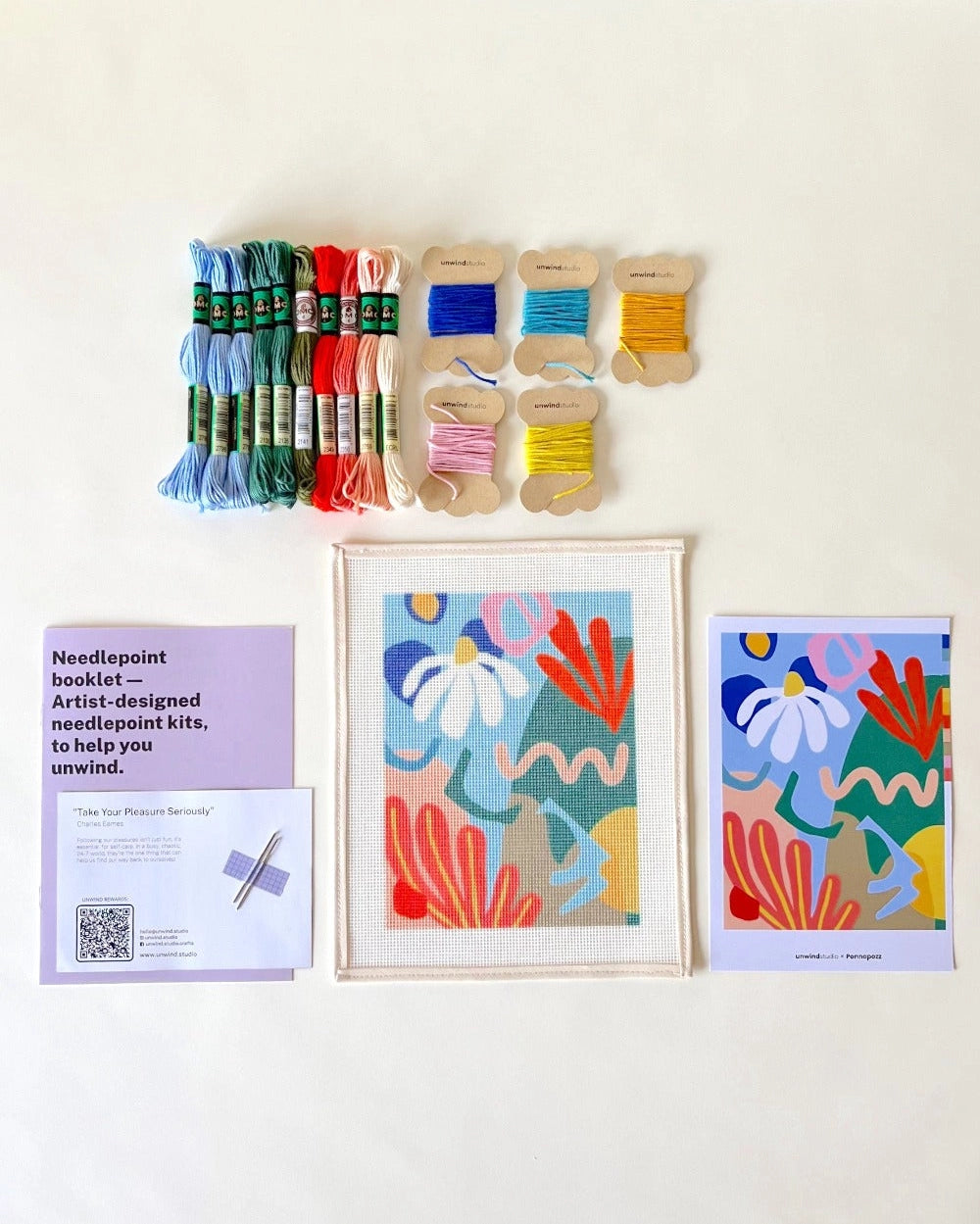
Once you complete your needlepoint stitching, there are many different options for finishing your project, due to the flexibility of the fabric. Many stitchers will frame their work, but finished needlepoints can be turned into pillows, bags, ornaments, and more. You are even able to outsource your finishing to a business that specializes in needlepoint finishing.
If you are interested in exploring the world of needlepoint, you can browse our selection of needlepoint kits here!
What is cross stitch?
Cross stitch is very similar to needlepoint, and they are often mistaken each other. The main difference is that while needlepoint is created by making a full row of forward slash stitches, cross stitch is created by making a row of forward slashes, and then doubling back along the same row with a "back slash", to create an "X". So instead of the entire project being made up of diagonal lines like needlepoint, the project is made up of X stitches.
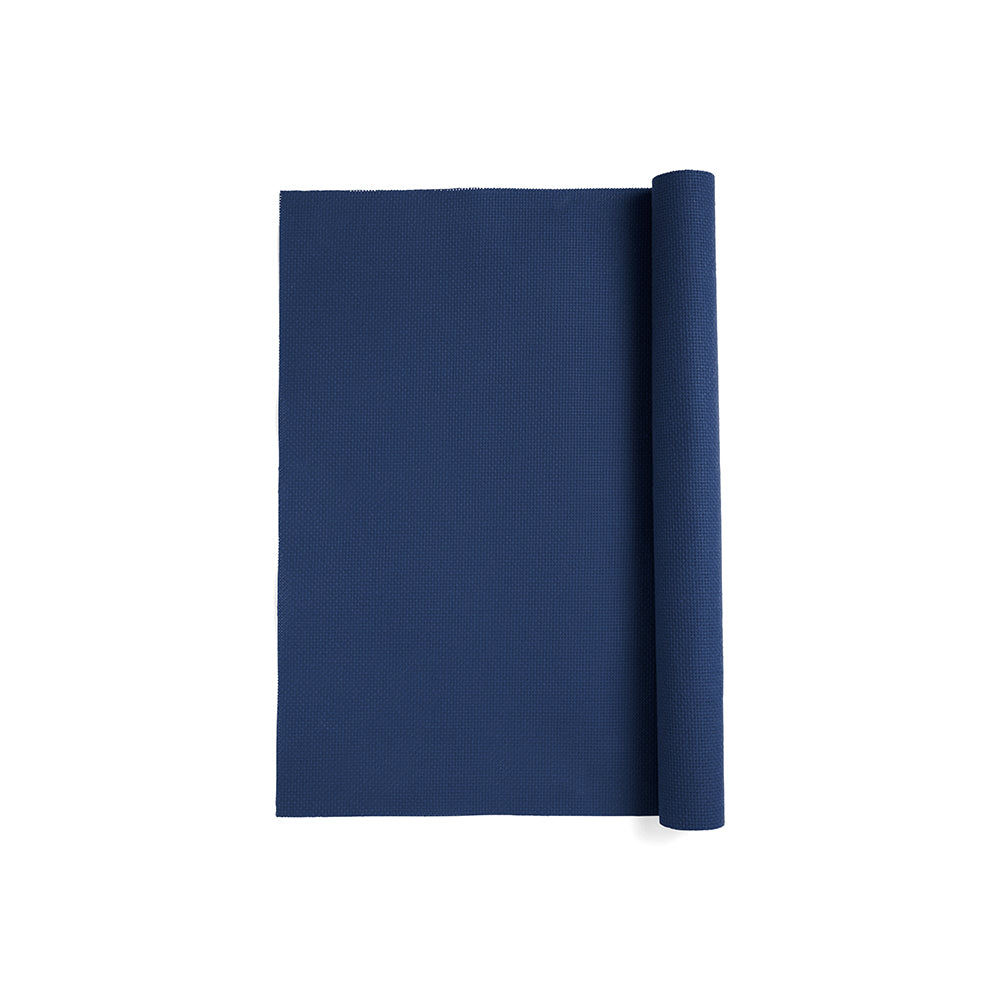
Cross stitch fabric, or Aida cloth, comes in many colors and sizes
Cross stitch is typically stitched onto a stiff grid fabric called Aida cloth. Projects are typically completed in an embroidery hoop, but smaller projects can be held in your hand. Cross stitch can also be completed on regular woven fabric with the addition of a "waste canvas" or a type of removable Aida cloth that can be temporarily attached to the fabric and then removed once the stitching is complete. A cross stitch kit will typically consist of the needle, the embroidery floss, Aida cloth, an embroidery hoop, a printed color chart, and an instructional guide. Check out our selection of cross stitch kits here!
Most cross stitch kits are "counted cross stitch," meaning that the fabric is left blank and the stitcher determines where to place the stitches by looking at the color chart and counting where each stitch goes, usually starting from the middle point of the fabric, or the pattern will tell you where they recommend starting.
Both needlepoint and cross stitch designs are created on a square grid, so they are more "pixelated" designs, meaning they won't have fully rounded edges. Embroidery is a bit more free form in the design and material that you can stitch upon.
What is embroidery?
We often say that cross stitch is more like baking and embroidery is more like cooking. Where it is more important to follow the rules to reach the desired outcome for cross stitch projects, that is less important with embroidery. If you don't exactly follow the rules for a stitch (or the steps of a recipe) you are probably just making a different stitch (or dish!)
Embroidery has over 300 named and documented stitches, with even more variations, but most beginners only need about 10-12 stitches under their belt to feel confident in their work and provide enough variety to keep it interesting. Beginner kits will usually consist of fewer stitches and colors, while more intermediate kits and "samplers" will have more options to learn. While cross stitch and needlepoint are worked into a canvas or a grid with a specific spot to place each stitch, embroidery is much more freeform. You can stitch on quilting cotton, woven clothing, tote bags, knit fabrics, hats, and more!
 The contents of the posing piglet embroidery kit from Jessica Long Embroidery
Most embroidery kits will contain the backing fabric, either pre-printed or with a paper pattern to transfer to the fabric, the needle, thread, a stitch guide and an embroidery hoop. Samplers are kits that are specifically designed to teach and display a variety of different stitches. As far as creating your own designs or kits, accomplishing this in embroidery is quite a bit easier than cross stitch or needlepoint. All you need to do is draw or apply the image onto the fabric, either with Saral paper, a water or heat erasable transfer pen, stick and stitch (a dissolvable paper), or iron-on transfers. If you need help with this, we are always happy to assist here in the shop, or in one of our embroidery workshops!
Learn more!
Of course, if you want more details, tips, and tricks, stop on by one of our workshops! We offer beginner cross stitch and beginner embroidery workshops every month! Check our workshop calendar to find a session that works for your schedule.
 Our intermediate embroidery workshop contains 7 stitches in the floral embroidery project.
Have you tried them all? Let us know your favorite and why in the comments!